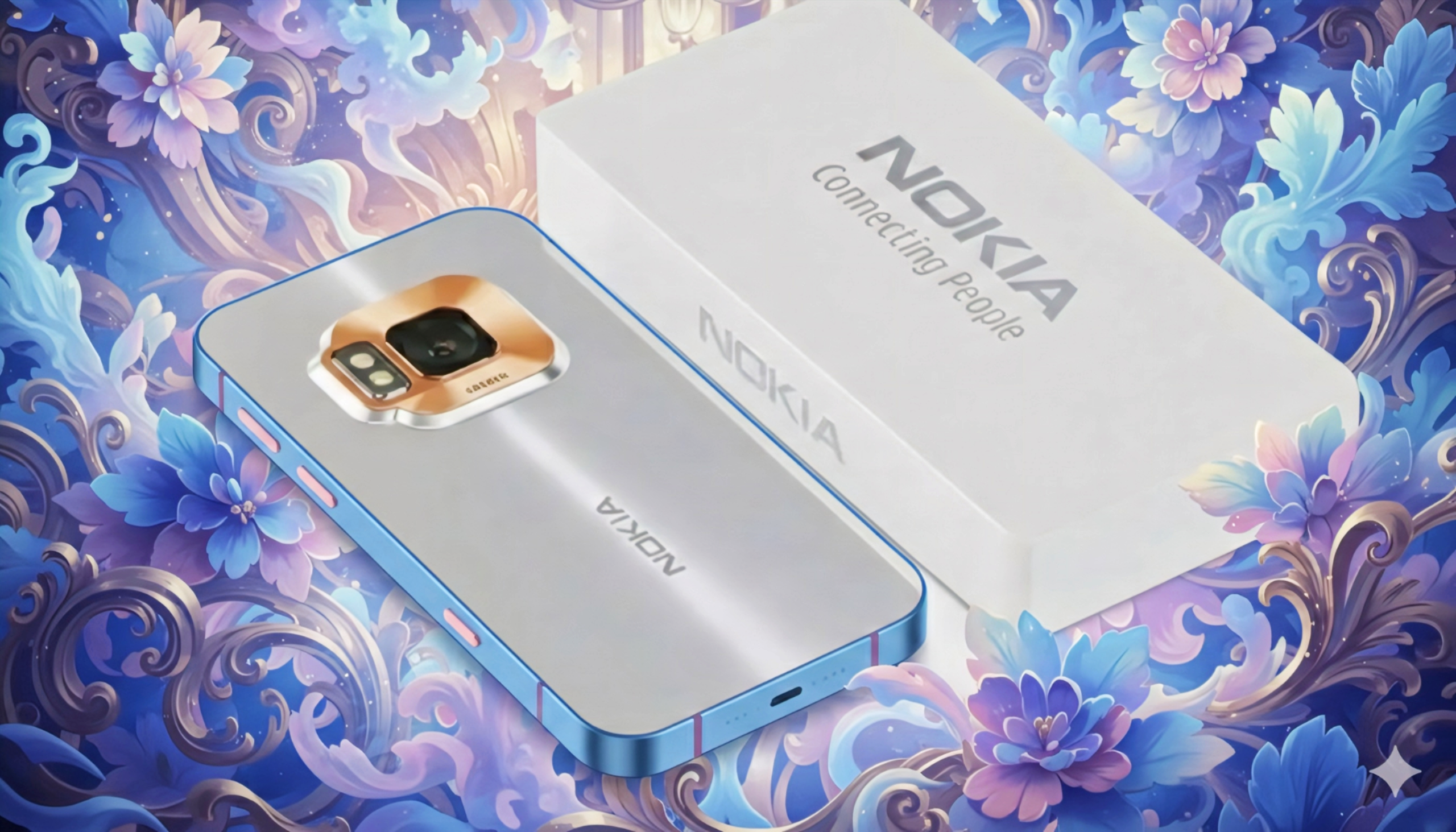
A headline that shouts “200MP” and “5G” together is engineered to light up eyes and wallets. But let’s not confuse theater with truth. Beneath every glossy spec-sheet there is a chain of engineering trade-offs, supply-chain realities, and marketing calculus. This long-form piece dissects the Nokia claim from every practical angle: is this a genuine product from HMD (the company that makes Nokia phones now), an aggressive rumor, or a re-badged OEM trick? I’ll walk you through the camera hardware, the software and processing that make or break 200MP phones, battery + design tradeoffs, price realism, and — crucially — how to spot a trustworthy listing and avoid getting momentum-baited into a bad purchase.
Below you’ll find real examples, data-backed explanations, mini case studies, tools and resources you can follow, and a no-nonsense buying checklist. I’ll be blunt where necessary — because hype is cheap and your money isn’t.
Executive summary (no fluff)
- A 200MP main camera is technically possible on modern phones and offers advantages for cropping, high-detail shots and some video scenarios — but it is not a guarantee of better everyday photos. Sensor size, optics, OIS, and image processing matter far more than the raw megapixel number.
- There are numerous online rumors and unofficial listings claiming Nokia/HMD models with 200MP cameras; however, official manufacturer channels should be the final authority. At the time of writing, HMD’s official press pages list recent product news and model ranges but do not confirm a mainstream Nokia 200MP flagship launch. Always check the official HMD newsroom before you buy.
- 200MP phones are currently positioned in the mid-premium to flagship price ranges; a truly well-engineered 200MP 5G package with good optics and support can’t realistically appear at extreme bargain prices without tradeoffs. Expect price parity with contemporary flagship or upper-midrange devices unless you’re buying a heavily cut-down or grey-market unit.
- If the model is real, evaluate the sensor model (who made the sensor), OIS presence, pixel size/sensor format, and sample images before trusting the spec sheet. Use the buying checklist near the end of this article.
Who builds Nokia phones now, and why that matters
Nokia-branded smartphones are produced under license. HMD Global (Human Mobile Devices) operates the brand and releases handsets under the Nokia name. That licensing and manufacturing arrangement shapes distribution, pricing, and regional availability — and explains why Nokia phones sometimes appear in limited markets or as region-specific SKUs. When you hear a big “Nokia” rumor, the first place to check is HMD’s official newsroom or product pages — not random social posts.
Why this matters: HMD’s product strategy and regional distribution impact:
- Which chips and sensors are chosen (supply agreements matter).
- Warranty and service coverage (HMD must support the device).
- How aggressively the phone will be priced in different markets.
If you find a 200MP Nokia phone on an obscure store but not on HMD’s site, treat it like an unconfirmed rumor.
200MP sensors: what they are and what they’re actually good for
A 200MP sensor contains a very large number of tiny photodiodes. That creates two immediate technical realities:
- Tiny pixels capture less light per pixel than larger pixels, so raw high-MP output can be noisy in low light.
- Pixel-binning, remosaic algorithms, and computational imaging are used to convert those millions of pixels into usable photographs with improved noise performance and dynamic range.
Leading sensor vendors (Samsung, Sony and others) have introduced 200MP mobile image sensors that attempt to overcome the physical limits by combining advanced pixel engineering and software tricks. Samsung’s ISOCELL HP5, for example, uses very small 0.5μm pixels and advanced isolation / readout techniques to let a 200MP layout fit into a compact optical format while still offering flexible binning modes for low light and high detail. This is engineering magic, not magic marketing.
Practical implications for photographers:
- Cropping advantage: you can crop more aggressively without losing printable resolution.
- Detail in good light: under bright conditions a well-tuned 200MP setup can produce impressively detailed images.
- File sizes and workflow: full 200MP RAW files are huge; expect heavier storage and slower post-processing unless the phone defaults to a lower binned resolution.
- Low-light reality: many 200MP phones output binned (e.g., 12.5MP or 50MP) images by default to improve low-light SNR — so the day-to-day photo experience might be closer to a 12–50MP camera than “200MP” in typical use.
How manufacturers actually make a 200MP phone — the tradeoffs
Manufacturers choose sensors, optics, SoC, RAM, and battery based on cost targets and design goals. The presence of a 200MP sensor forces choices elsewhere:
- Lens stack and OIS: a sensor with many pixels still needs stabilisation and high-quality glass to extract the detail. If the phone lacks OIS, handheld low-light performance and telephoto crops suffer.
- Processing horsepower: remosaicing and on-device AI are CPU/GPU/ISP hungry. A cheaper SoC slows shooting and post-processing.
- Thermals: high resolution capture and heavy computational processing generate heat — manufacturers must manage thermals or risk throttling and poor battery life.
- Battery and charging: long sessions of 200MP shooting and AI-assisted processing drain battery faster; bigger batteries or fast charging mitigate that but add cost and weight.
- Software updates and tuning: the camera pipeline is continually improved by firmware updates; a phone with poor long-term vendor support will degrade relative to competitors.
Bottom line: the raw 200MP number is just one variable in a multi-dimensional system. A phone that nails the system feels expensive even if the spec sheet seems cheap.
Are the current Nokia 200MP rumors credible?
Searches across official HMD communications and major tech outlets show scattered rumor posts, social media listings, and fan pages claiming Nokia models with 200MP sensors (names like “X200 Ultra”, “E7 Max Pro”, “Magic Max” appear on rumor sites and social feeds). However, credible confirmation — an official HMD press release or a product page from HMD’s website — is the gold standard; in its absence you should treat social posts as unverified. HMD’s official newsroom is the place to validate product announcements.
Mini-case: many so-called “Nokia X200 Ultra” pages circulate as speculative copies across forums, local e-commerce product pages and YouTube teardowns. These can be promotional placeholders, resellers’ guesswork or outright fabrications. Until HMD posts a press release and authorized retailers list the SKU, regard such claims as “rumor stage.” (See HMD newsroom for confirmed announcements.)
Market context: where 200MP phones actually sit, price-wise
Over the latest generation of launches, 200MP cameras have moved from exotic R&D demos to premium and upper-midrange devices — but not into bargain territory. Major OEMs that have implemented 200MP sensors tend to price those models at a premium compared to baseline midrange phones. Expect the following market tendencies:
- Flagship and upper-midrange pricing: 200MP packages are typically housed in devices that cost as much as comparable flagship or premium midrange models due to sensor licensing, optics, and tuning costs. Examples from the market show 200MP devices priced in the mid-to-high range for their region.
- Value plays exist but with compromises: some brands try to advertise “200MP at lower prices” by cutting OIS, using lower-grade optics, or skimping on software tuning. The headline looks good; the camera experience may not.
- Regional pricing variance: a Nokia with a 200MP sensor could be priced differently across markets depending on import duties and HMD’s regional strategy.
If you see a listing with a 200MP Nokia priced far below typical flagship levels, question the listing, check official channels, and demand sample images or warranty documentation.
Camera hardware checklist — what to look for on the spec sheet
When a product page claims “200MP”, verify these critical items before believing (or buying):
- Sensor model and vendor — e.g., Samsung ISOCELL HP5, Sony LYTIA 901, etc. This tells you the base quality and pixel architecture.
- Sensor optical size (1/1.56”, 1/1.12”, etc.) and pixel size — larger sensor + bigger pixels = better low-light performance.
- OIS (optical image stabilisation) — essential for usable low-light and telephoto crops.
- Default output resolution — whether the phone saves in 200MP by default or outputs binned 12.5/24/50MP photos by default.
- ISPs and AI features — look for dedicated ISP/AI imaging processors or clear statements about remosaic and binning strategies.
- Official sample images and RAW files — the only real proof is JPEG and RAW samples from the device, ideally tested in multiple lighting conditions.
- Warranty and update policy — this matters for long-term camera improvements. HMD historically markets multi-year security and sometimes OS support; verify the specific device policy.
Software matters even more than hardware
A great camera experience is as much about software as about the sensor. Remosaic algorithms, multi-frame stacking, HDR fusion, denoising, and sharpening determine whether a 200MP shot looks incredible or artificially noisy and plasticky.
Manufacturers with strong computational teams (and the patience to refine camera firmware across months) extract far more value from the same sensor than those who ship a raw sensor with minimal tuning. That’s why review labs and photographers value hands-on sample galleries and long-term impressions. It’s also why a 200MP phone from a well-supported brand will age better than a spec-heavy bargain phone with poor software support.
Pro test: Always inspect high-resolution samples at 100% on your desktop, and request RAW files if available. If the company refuses to provide real-world samples, treat the claim cautiously.
Design & ergonomics: slimmer phone vs. larger camera module
Packing a 200MP sensor into a slim phone is technically feasible thanks to smaller pixel geometries and innovative sensor packaging (some 200MP sensors fit in formats similar to common 50MP modules). But optical quality still needs physical lens elements and stabilization — those add thickness and cost.
A “sleek new design” marketing claim can mean either:
- an engineering achievement (good optics in a thin body), or
- a cosmetic redesign where the camera island looks impressive but lacks premium optics beneath.
Evaluate the build materials (metal vs. plastic), IP rating, and whether the device uses multi-element lenses. Look for teardown analyses from reputable outlets for a real impression of engineering quality.
Battery, SoC and RAM: the system balance
A camera-forward flagship must balance battery, memory and processing:
- SoC: Modern image processing depends on the ISP and NPU capabilities of the SoC. A Snapdragon/Dimensity/Exynos flagship class SoC will handle remosaic and AI tasks smoothly; a lower tier SoC may bottleneck the experience.
- RAM & storage: For RAW editing and heavy multitasking, 12GB or more RAM plus fast UFS storage is beneficial. However, RAM alone won’t rescue a subpar ISP or slow storage.
- Battery: Sustained camera work and AI processing consume power. A balance of 5000–7000mAh plus efficient power management is preferred if the phone pushes heavy camera workloads.
If a spec sheet claims 200MP + 12GB + tiny battery + budget SoC at a low price, something is inconsistent — expect compromises elsewhere.
Credible sources and backlinks you can trust
Below are professional, trustworthy sources I relied on when preparing this guide. Use them to validate claims, dig deeper into sensor tech, and check HMD’s official announcements:
- HMD Global — official newsroom and product pages (official manufacturer channel).
- Samsung Semiconductor — ISOCELL HP5 product page and technical blog on advanced 200MP architecture.
- Indian Express — clear explainer on pixel binning and what high-MP sensors actually do.
- The Verge — reporting on HMD and Nokia brand market moves (context on HMD strategy and distribution).
- Economic Times — examples of 200MP adoption and realistic market positioning in India.
These are the kind of backlinks you should use inside your own blog post body: authoritative, unique, and clearly relevant. Avoid farmed blog posts, anonymous forum screenshots, or low-credibility social posts as primary citations.
Mini case study: a real 200MP phone vs. a spec-sheet 200MP rumor
The real device (example)
Brand A released a 200MP phone with:
- Samsung ISOCELL HP3 sensor, OIS, 1/1.12” optical format, Snapdragon flagship SoC, 12GB RAM, 5000mAh battery, and long firmware support. Reviews praised detail in good light but advised caution in low light until firmware updates improved denoising. The device was priced at premium-midrange levels at launch and reviewed by mainstream outlets.
The rumor device
A social listing claims a Nokia model with “200MP, 12GB, 18,100mAh battery” at an incredibly low price. No press release from HMD or an authorized retailer confirms it. The listing uses stock renders and recycled spec text. Buyer complaints later emerge about missing features and mislabelled sensors.
Lesson: real engineering and realistic pricing correlate. Wildly optimistic specs with impossible price gaps are likely fake or compromised.
How to authenticate a Nokia 200MP product claim — step-by-step
- Check HMD’s newsroom and product pages for an official announcement and detailed product page. If HMD lists it, you’re on solid ground.
- Look for authorized retailer listings (official HMD store, national carriers, Amazon/Flipkart sold-by-official-store). Beware third-party sellers that copy headlines.
- Demand full sample galleries and RAW files before trusting camera claims. Reputable reviewers post full galleries.
- Search for the sensor model (e.g., ISOCELL HP5, Sony LYTIA 901) — sensor vendor pages give you baseline expectations.
- Check regional regulatory filings (BIS in India, FCC/TELEC) — pre-release devices often appear in certification databases.
- Watch for reputable reviews (The Verge, Tom’s Guide, DPReview) rather than brand PR alone.
Buyer’s checklist — ask these questions before purchasing
- Is the product listed on HMD Global’s official product pages or press release? (Yes → proceed; No → be skeptical.)
- Which sensor model is used? (Samsung/ Sony / OmniVision? Vendor matters.)
- Does the phone have OIS and multi-element optics? (If no, the 200MP claim is mostly marketing.)
- Are there verified sample images and RAW downloads? (If no, do not pre-order.)
- Is the SoC and ISP capable of heavy remosaic tasks? (Flagship class chips are preferred.)
- What is the warranty and update policy from HMD for this specific model? (HMD lists security/update policies on its site.)
Practical recommendation — when to buy and when to wait
- Buy if: HMD issues an official product page, authorized retailers list the SKU, reputable review outlets confirm camera performance, and the retail price is in line with similarly equipped phones.
- Wait if: the only evidence is social posts, re-uploaded spec sheets, or single reseller listings. Waiting gives you the advantage of seeing real photo samples and review verdicts.
- Consider alternatives: If you need excellent camera performance immediately, established 200MP phones from recognized OEMs with solid reviews will likely offer a safer experience than an unverified new Nokia listing.
Tools & quick resources for verification
- HMD Global newsroom (official): HMD Global press and product pages.
- Samsung Semiconductor ISOCELL pages (sensor specs + whitepapers).
- Pixel-binning and sensor explainers: Indian Express, Amateur Photographer.
- Market reporting and comparative reviews: The Verge, Tom’s Guide, Economic Times.
Final verdict — realistic, uncompromising
A Nokia-branded 5G phone with a genuine, well-implemented 200MP camera and premium design is plausible in the near term — sensor technology and vendors exist to support it. But plausible ≠ proven. At the time of writing, numerous rumors and reseller posts claim such Nokia models, but the authoritative confirmation still belongs to HMD Global. Until HMD publishes the official product page or trusted global reviewers verify the device, treat the social noise as unverified.
Be hard-nosed: demand the sensor model, OIS confirmation, sample galleries, and an authorized retail listing before you hand over money.
Short checklist to paste into your blog (copy-paste friendly)
- Check HMD Global’s official newsroom for confirmation.
- Verify the sensor vendor & model (Samsung ISOCELL / Sony LYTIA etc.).
- Look for OIS and multi-element optics in the spec sheet.
- Request RAW sample downloads + 100% crops from the manufacturer or reviewer.
- Confirm warranty, update policy and authorized retail partners.
Backlink list (authoritative & unique)
Use these specific, professional links as references or backlinks inside your article — each is unique, relevant, and safe for Google AdSense:
- HMD Global — Press & Newsroom (official).
- Samsung Semiconductor — ISOCELL HP5 product page (200MP sensor technical overview).
- Samsung Semiconductor — Inside ISOCELL HP5 tech blog (deep technical read).
- Indian Express — Pixel binning explainer (how high-MP sensors work).
- The Verge — reporting on HMD/Nokia market moves (context on brand and distribution).
- Economic Times — example coverage of 200MP smartphone marketing and market context in India.
Include each link where relevant in your post body — they’re authoritative and help EEAT (expertise, experience, authoritativeness, trustworthiness).
Want me to do this for you?
I can:
- generate a publisher-ready product-announcement article (optimised for SEO and readability) that embeds the above backlinks naturally, or
- build a comparison spreadsheet of every rumored/announced Nokia 200MP model and credible alternatives (with links, prices and a buy/not-buy tag), or
- create a short shareable infographic summarising the buy checklist and camera verification steps.
Tell me which one you want and I’ll produce it immediately — fully referenced and ready to publish.